Labiaplasty is surgery most often performed to change the size or shape of the labia minora. This guide explains normal anatomy, the main surgical approaches, decision-making and recovery step by step.
First, understand normal anatomy
The length, thickness and colour of the labia minora, and the symmetry between the two sides, vary from person to person. Labia minora that extend beyond the labia majora, or sides that are not equal, do not by themselves indicate disease. There is no single “ideal” appearance.
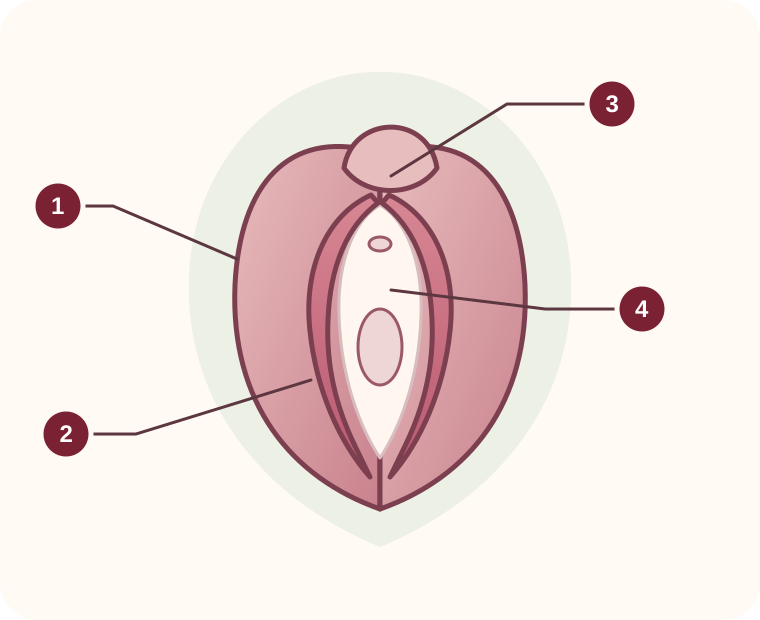
- 1Labia majora (outer labia)
- 2Labia minora (inner labia)
- 3Clitoral hood
- 4Vestibule (area between the labia minora)
Results of every surgical or interventional procedure may vary from person to person. You are advised to obtain detailed information from your doctor before the procedure.
When may labiaplasty be considered?
The decision does not have to be based on appearance alone. Friction during exercise or in tight clothing, repeated irritation, pulling of the tissue or mechanical discomfort during sexual activity may be reasons to seek advice. Persistent concern about appearance can also be discussed openly and without judgement.
The source of the symptoms is assessed first. If there is a skin condition, infection, pelvic floor problem or another gynaecological cause, the appropriate treatment may differ from surgery. Non-surgical options such as looser clothing, care that reduces irritation, modifying activities or using lubricant may be sufficient for some people. Surgery is elective; the decision is made after discussing expected benefits and possible risks together.
How is it performed? Trim and central wedge approaches
There are different labiaplasty techniques and adaptations of them. Here, to provide a general idea, we discuss two main approaches: trim and wedge.
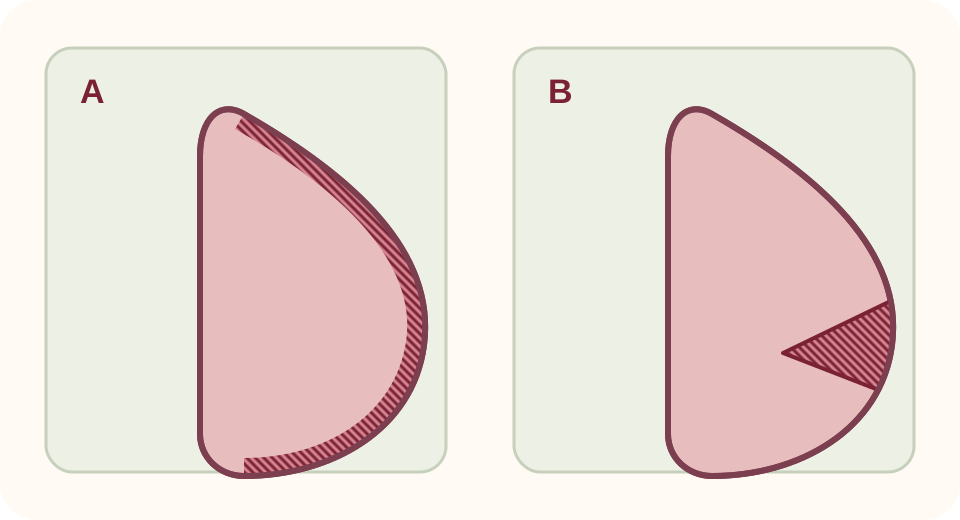
A · Trim approach
A planned strip of tissue is removed along the free edge of the labium and the incision is closed.
B · Central wedge approach
A wedge-shaped section of tissue is removed from the middle of the labium; the remaining edges are brought together.
No one method can be said to be superior for everyone. Edge characteristics, the amount of tissue, asymmetry, the person's priorities and the surgeon's experience are considered together when choosing a technique. Clitoral hood reduction is a separate procedure; it is not an automatic part of labiaplasty.
My approach to choosing a technique
“Because the trim technique can change the outer contour more, I use wedge excision more often in my own practice. However, I choose the technique according to each patient's anatomy and needs.”
Op. Dr. Yasemin Aydınlı
Can it be combined with other procedures?
In suitable patients, vaginoplasty may also be planned during the same session as labiaplasty. If the labia majora have lost volume, fat injection using the person's own fat may be considered to add volume. Combinations in which these three procedures are planned together may also be colloquially called “Barbie vagina aesthetic surgery”. This is not a standard medical procedure name, and the same procedures are not needed for every patient. Procedures to be combined are determined after assessing health, anatomy, expectations and additional risks.
Preparation and the day of surgery
During examination, the location of the discomfort, expectations, medical history, medicines and tobacco use are discussed. Required tests, medication changes and pre-operative fasting instructions are given individually. Whether local anaesthesia, sedation or general anaesthesia is appropriate depends on the scope of the procedure, health status and clinical setting. The duration of surgery and the possibility of same-day discharge are likewise planned individually.
What can you expect during recovery?
Swelling, bruising, tenderness and discomfort when sitting may occur during the first days. Follow the recommended wound care; keep the area clean and dry, and choose loose clothing that reduces friction. If cold application is advised, use it without direct skin contact and for the instructed duration.
There is no single return date that suits everyone, even for desk work. The physical demands of the job, swelling and wound healing are considered together. Activities that cause friction or pressure, such as running, cycling and strenuous exercise, and sexual activity are resumed gradually after a follow-up examination. The final appearance may become clearer over several months as swelling subsides.
Risks and when to seek help
Possible problems include bleeding or haematoma, infection, wound separation, a noticeable scar, asymmetry, excessive or insufficient tissue removal, persistent pain, altered sensation and the need for revision surgery. Improvement in sexual function or guaranteed resolution of hygiene concerns cannot be promised.
Contact the surgical team without delay if you develop increasing or one-sided swelling, bleeding that does not stop, foul-smelling discharge, fever, worsening pain, marked darkening of the tissue or shortness of breath; shortness of breath requires urgent assessment.
Frequently asked questions
Labiaplasty most often changes the size, edge or asymmetry of the labia minora. Procedures involving the clitoral hood or labia majora are separate and are added to the plan only if they are assessed independently.
There is no single technique that is superior for every patient. Edge characteristics, the amount of tissue, asymmetry, the intended change and the surgeon's assessment are considered together.
Swelling, bruising and tenderness can be expected during the first days; even a return to desk work is planned according to the nature of the job and individual healing. Sports that cause friction and sexual activity are resumed gradually only after the surgeon's examination and approval.
Every surgical incision heals with a scar. In this area, scars can become quite faint once healing is complete. Their appearance is affected by the technique, wound healing, infection, tissue tension and individual characteristics; the same appearance should not be expected in everyone.
No. Labiaplasty reshapes labial tissue in the external genital area; vaginoplasty is a different operation involving the vaginal canal and surrounding tissues.
References
- Furnas HJ, Canales FL, Pedreira RA, Comer C, Lin SJ, Banwell PE. The Safe Practice of Female Genital Plastic Surgery. Plast Reconstr Surg Glob Open. 2021;9(7):e3660. PMID 34249585. PubMed record
- Géczi AM, Varga T, Vajna R, Pataki G, Meznerics FA, Acs N, Hegyi P, Nyirady L, Pal P, Farkas N, Fazekas A, Varbiro S, Sara L. Comprehensive Assessment of Labiaplasty Techniques and Tools, Satisfaction Rates, and Risk Factors: A Systematic Review and Meta-analysis. Aesthet Surg J. 2024;44(11):NP798–NP808. PMID 38957153. PubMed record
- NHS. Labiaplasty. NHS patient information
- ACOG. Vaginal Rejuvenation, Labiaplasty, and Other Female Genital Cosmetic Surgery. ACOG patient information