Short answer
- In the first week swelling, tightness and bruising are normal. If there is a drain it is usually removed on the 2nd day; in some patients it may stay longer.
- In the 1st–2nd week most patients return to desk-based or light work.
- In the 6th–8th week strenuous sport begins gradually.
- The final result settles at 6 months in most patients, and sometimes up to 1 year.
- Doing it as a combined procedure is not inferior in safety to a single procedure — but this comes from small-scale studies.
A mommy makeover is a combined procedure in which breast surgery is brought together with the tummy tuck most often together with liposuction. Because it is combined, recovery proceeds a little more methodically than after a single procedure. In this article I describe how the process develops day by day, what to watch out for, and the timing for patients coming from abroad.
Is combined surgery riskier than a single procedure?
The available data show that combined surgery is not inferior in safety to a single procedure.
In a prospective study of thirty-seven patients, a mommy makeover was compared with a tummy tuck alone. The combined surgery was not inferior in terms of safety; and it provided a clear advantage in body image and patient satisfaction. 1 Series in which breast reduction and tummy tuck were performed together point in a similar direction. 2,3
Here one has to be honest: these are small-scale studies. They are not enough to say "combined surgery is safe in every patient". The decision is made individually, according to the patient's state of health and the extent of the procedures to be performed.
How does recovery progress day by day?
Swelling and tightness in the first week, return to light work in weeks 1–2, strenuous sport at weeks 6–8, final shape at months 3–6.
The timetable below is a general framework; the durations vary with the person, the extent of the procedures performed and the speed of healing.
The first days (days 0–7)
Mild swelling, tightness and bruising are normal. If a drain has been used it is usually removed on the second day; in some patients it may stay a few days longer. The support garment and bra are worn regularly. Early and gentle movement (walking) is recommended. Pain is generally under control.
Weeks 1–2
Most patients return to desk-based or light work. Part of the swelling goes down. Heavy lifting, bending and strenuous movements are avoided.
Weeks 3–6
Daily life is largely resumed. Most of the swelling recedes and the contours begin to show. Light activities such as walking can be increased; strenuous exercise is still too early.
Weeks 6–8
Strenuous sport and demanding activities begin gradually with the doctor's approval. This threshold is particularly important in patients who have had abdominal wall repair.
Months 3–6 and beyond
The fine swelling resolves completely; the breasts and abdomen settle into their natural shape. The scars continue to fade. The final result becomes clear at 6 months in most patients, and sometimes up to 1 year.
What can I do to make healing easier?
Wear the garment regularly, move early and gently, stop smoking and attend your check-ups.
- Wearing the garment and support bra recommended by the doctor regularly.
- Early and gentle movement — not lying down for long periods.
- Enough fluids, a balanced diet and rest.
- Stopping smoking.
- Attending check-ups regularly and following instructions.
What is done about the risk of clots?
Early and gentle movement is a fundamental part of protection in combined trunk surgery.
In the prevention of venous thromboembolism after tummy tuck and liposuction, early mobilisation is described as part of the standard approach.4,5 Risk assessment and additional measures are planned according to the patient.
Does smoking really affect healing?
Yes. Systematic reviews show that smoking significantly increases wound complications in plastic surgery.
Two separate meta-analyses have shown that wound-healing problems and overall complication rates are markedly higher in patients who smoke.6,7 For this reason a plan to stop before surgery is part of the process.
When should I see a doctor?
Without delay if there is fever, one-sided leg pain or swelling, sudden shortness of breath, unexpected severe pain, excessive redness or discharge.
These symptoms are rare, but early assessment is important. Because this is a combined operation, clot prevention, wound care and avoiding excessive exertion come to the fore in the first weeks. Scars can be more visible in the early months and fade with time; they are not expected to disappear completely.
How does the process work for a patient coming from abroad?
It begins with an online assessment, a programme of a few days is carried out in Istanbul, and remote follow-up is provided after the return home.
Because it is a combined procedure, a programme of a few days is usually arranged in Istanbul; a check is carried out before the return journey and remote follow-up continues afterwards. Coordination with the local doctor is established when needed. Support is offered in six languages throughout the process.
In brief
Recovery after a mommy makeover proceeds a little more methodically than after a single operation, but it has a predictable framework: rest and gentle movement in the first week, return to light work in weeks 1–2, strenuous sport at weeks 6–8, final shape at months 3–6. There are data showing that performing it as a combined procedure is not inferior in safety to a single procedure; even so, the decision is made separately for each patient.
References
- Toto V, Scarabosio A, Alessandri-Bonetti M, ve ark. Combined Surgery (Mommy-Makeover) Compared to Single Procedure (Abdominoplasty) in After-Pregnancy Women: A Prospective Study on Risks and Benefits. Aesthetic Plast Surg. 2023;47(6):2533–2542. PMID 37612475
- Pouramin P, Dow T, Williams J. Exploring Complication Rates: A Comparative Study of Breast Reduction and Combined Breast Reduction with Abdominoplasty. Aesthetic Plast Surg. 2024;48(22):4660–4666. PMID 38684537
- Wolf Y, Fainzilber-Goldman Y, Skorochod R. A Comparative Analysis of the Complication Rate in "Mommy Makeover" Procedures and Abdominoplasty. Isr Med Assoc J. 2025;27(8):526–530. PMID 40819205
- Mittal P, Heuft T, Richter DF, ve ark. Venous Thromboembolism (VTE) Prophylaxis After Abdominoplasty and Liposuction: A Review of the Literature. Aesthetic Plast Surg. 2020;44(2):473–482. PMID 31858207
- Kraft CT, Janis JE. Deep Venous Thrombosis Prophylaxis. Clin Plast Surg. 2020;47(3):409–414. PMID 32448477
- Pluvy I, Panouillères M, Garrido I, ve ark. Smoking and plastic surgery, part II. Clinical implications: a systematic review with meta-analysis. Ann Chir Plast Esthet. 2015;60(1):e15–49. PMID 25447218
- Theocharidis V, Katsaros I, Sgouromallis E, ve ark. Current evidence on the role of smoking in plastic surgery elective procedures: A systematic review and meta-analysis. J Plast Reconstr Aesthet Surg. 2018;71(5):624–636. PMID 29426809
General reading
The sources below do not directly support the figures above; they are suggested as a general introduction to the subject.
- Hammond DC. Atlas of Aesthetic Breast Surgery. Saunders/Elsevier, 2009.
- International Society of Aesthetic Plastic Surgery (ISAPS) — isaps.org
- Turkish Society of Plastic, Reconstructive and Aesthetic Surgery (TPRECD) — plastikcerrahi.org.tr
About the Author
Op. Dr. Yasemin Aydınlı is a graduate of the Hacettepe University English Medical Faculty; she completed her specialist training at Ankara University. She focuses on breast and body aesthetics in Istanbul, and has peer-reviewed publications and congress presentations on the safety of combined aesthetic surgery.
This article is for general information only and does not replace medical advice. Healing times and the process vary according to each patient's anatomy, state of health and the procedures performed; they can only be determined through personal examination and follow-up.
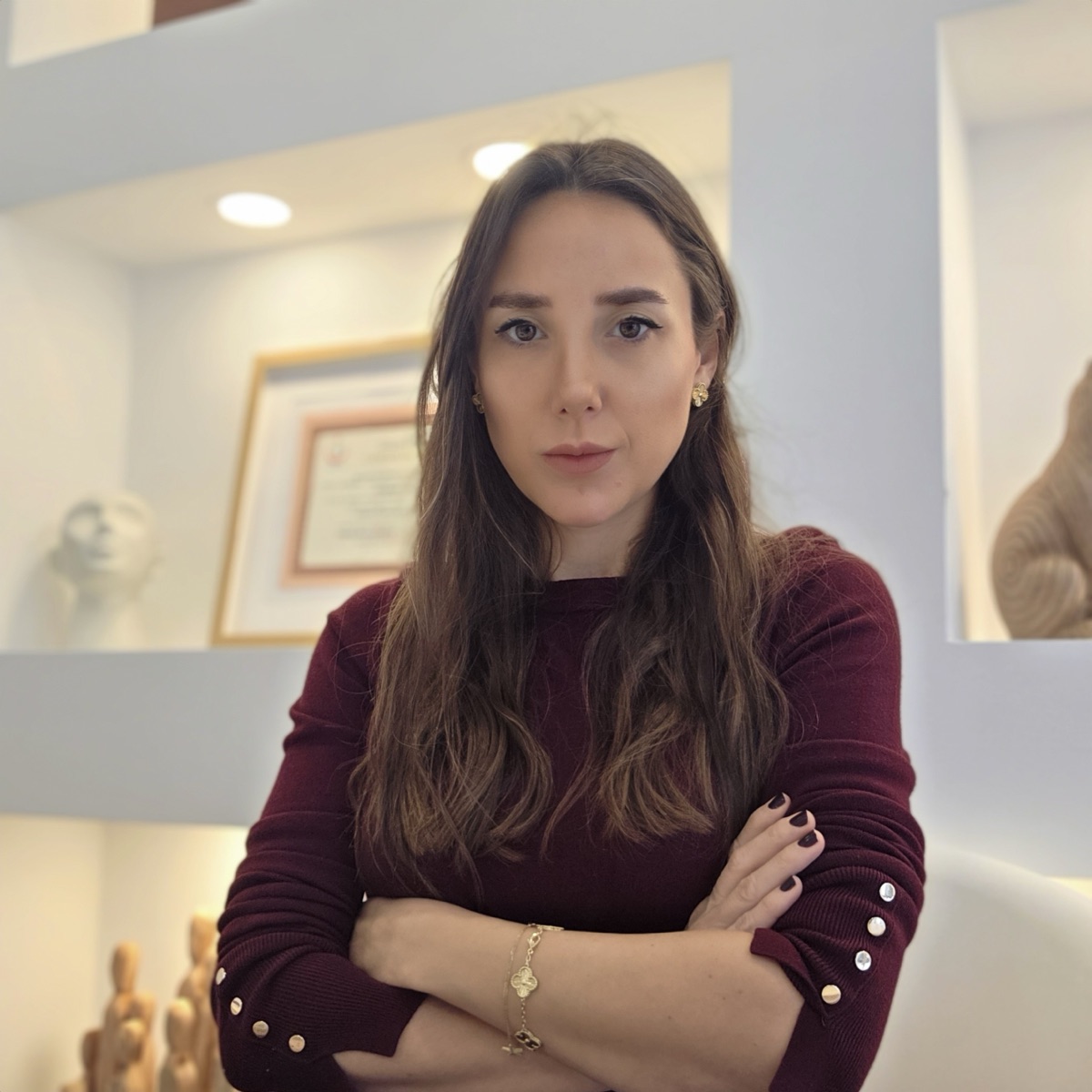
Op. Dr. Yasemin Aydınlı
Plastic, Reconstructive and Aesthetic SurgeonOffers personalized aesthetic solutions with a priority on naturalness and balance.
Frequently Asked Questions
Most patients return to desk-based or light work in the 1st–2nd week. Heavy lifting, bending and strenuous movements are avoided during this period.
Strenuous sport and demanding activities begin gradually in the 6th–8th week with the doctor's approval.
If a drain was used, it is usually removed on the second day; in some patients it may stay a few days longer.
Fine swelling resolves in the 3rd–6th month. The final result becomes clear at 6 months in most patients, and sometimes up to 1 year.
In case of fever, one-sided leg pain or swelling, sudden shortness of breath, unexpected severe pain, excessive redness or discharge, medical attention must be sought without delay.