If you're considering flying to Istanbul for a BBL or a mommy makeover, you've probably already found the price. What's harder to find is a straight answer about the risk — written by a surgeon rather than an agency.
So here it is, with the actual numbers and their limits.
Is BBL safe?
It is meaningfully safer than it was ten years ago, and we know why.
In 2017 the Aesthetic Surgery Education and Research Foundation convened a task force after repeated reports of deaths from gluteal fat grafting. A survey went to 4,843 plastic surgeons; 692 responded — a 14.3% response rate, which matters when you read the numbers. Those surgeons reported 198,857 gluteal fat grafting cases, and over their careers reported 32 deaths from pulmonary fat embolism and 103 non-fatal ones. Three percent of respondents had experienced a patient death; 7% had seen at least one fat embolism.
The task force classified gluteal fat grafting as a high-risk procedure.
What actually makes a BBL dangerous?
The depth the fat is injected at.
The buttock contains large veins within and beneath the gluteus maximus. If a cannula enters one under pressure, fat travels to the lungs. A cadaveric study published in 2020 mapped these vessels and found the subcutaneous plane holds the smallest ones — averaging 0.9 mm arteries and 1.05 mm veins — supporting the recommendation that fat belongs above the muscle.
The change in practice is measurable. A follow-up survey found that in the two years after the recommendations, fat embolism incidence fell to 1 in 2,492 from 1 in 1,030, and the mortality trend went from 1 in 3,448 to 1 in 14,952. Surgeons injecting into deep muscle dropped from 13.1% to 0.8%.
But here is the part the marketing pages leave out.
The task force reported that some surgeons who had a fat embolism were emphatic that they had injected only subcutaneously — and noted that injected fat can track along tissue planes into deeper areas where large veins sit. Staying subcutaneous is necessary. It is not a guarantee.
Worth knowing: the volume of fat grafted has not been found to be associated with this complication. More fat is not the risk. Depth is.
So the question to ask is still worth more than any review you'll read:
"What plane do you inject into, and how do you control cannula depth?"
The answer should be subcutaneous only, never intramuscular — and a surgeon who takes it seriously will talk about angle and control, not just say "subcutaneous."
Is combining procedures in one operation safe?
The available evidence is reassuring, and thin.
This matters when you're traveling, since flying twice isn't realistic. A 2025 study compared 726 abdominoplasty patients, of whom 15% — roughly 109 — also had breast surgery. After accounting for confounders there was no difference in adverse events, and surgical site infections were actually seen more often in the abdominoplasty-only group.
Read that with its limits: one center, one surgeon, and a combined group of about a hundred patients. It does not prove combining is always safe. It does mean the claim that a mommy makeover is inherently more dangerous than its parts isn't supported by this data.
When can I fly after surgery?
Almost nobody answers this honestly, so read carefully.
For the general traveler, clots from flying are rare. A systematic review found roughly 27 pulmonary emboli per million flights through ordinary clinical care, and about 0.05% symptomatic DVT when travelers were screened by ultrasound.
That review's practical line: travelers with no risk factors don't need prevention regardless of flight length, while travelers with one or more risk factors should consider graduated compression stockings and/or low-molecular-weight heparin for flights longer than six hours.
Two specifics from the same review that are worth more than most travel advice:
- Compression stockings worked — they prevented travel-related clots in four of six studies.
- Aspirin did not. If your plan for a ten-hour flight after surgery is an aspirin, you don't have a plan.
Note that this review's own high-risk list is previous DVT, clotting disorders, severe obesity, limited mobility, cancer and large varicose veins — recent surgery isn't on their list, because they were studying travelers generally. Surgery is scored separately, in the risk model below.
Your length of stay follows from this, plus when drains come out and when the first checks happen. It is a medical decision, not a package length.
How is my clot risk actually assessed?
With a scoring system, before surgery.
Body contouring raises clot risk and the field has tools for it. A published abdominoplasty series scored every patient with the Caprini/Davison risk assessment model and applied preventive measures according to the score.
Ask three things: is my risk being scored, what is my score, and what are you doing about it. If nobody can tell you the score, nobody has assessed it.
What should I verify about the surgeon?
Turkey has excellent plastic surgeons and it has bad actors, and their websites look the same. Verify away from the clinic's own site:
- Is this person a registered plastic surgery specialist? In Turkey specialty is recorded with the Ministry of Health; society memberships (TPRECD nationally, ISAPS internationally) are verifiable on those organizations' own websites.
- Who will actually operate? Get a name. Some organizations sell the consultation and assign whoever is free.
- Where? A full hospital with an intensive care unit. For BBL and mommy makeover this isn't optional.
- Who administers the anesthesia? An anesthesiologist should be named.
- Are you talking to the surgeon or to a salesperson? You should speak with the person holding the knife before you fly.
The short version
- BBL is meaningfully safer than it was, because of one specific technical change — but subcutaneous placement reduces risk, it doesn't eliminate it.
- Fat volume isn't the danger. Depth is.
- A mommy makeover doesn't appear riskier than its parts, though the evidence is limited.
- After surgery you're a higher-risk air traveler: stockings help, aspirin doesn't, and your flight home should be planned medically.
References
- Mofid MM, Teitelbaum S, Suissa D, et al. Aesthet Surg J. 2017;37(7):796–806. PMID 28369293
- Ordenana C, Dallapozza E, Said S, et al. Aesthet Surg J. 2020;40(4):402–409. PMID 31665218
- Rios L, Gupta V. Aesthet Surg J. 2020;40(8):864–870. PMID 32306045
- Wolf Y, Fainzilber-Goldman Y, Skorochod R. Isr Med Assoc J. 2025;27(8):526–530. PMID 40819205
- Philbrick JT, Shumate R, Siadaty MS, et al. J Gen Intern Med. 2007;22(1):107–114. PMID 17351849
- Somogyi RB, Ahmad J, Shih JG, et al. Aesthet Surg J. 2012;32(3):322–329. PMID 22395323
About the Author
Op. Dr. Yasemin Aydınlı is a graduate of Hacettepe University English Medical Faculty and completed her specialty training at Ankara University. She is a member of TPRECD and ISAPS and works in aesthetic and reconstructive surgery in Istanbul.
This content is general information only and does not replace medical advice. Every patient is different; suitability, technique and timing can only be determined through a personal examination and consultation.
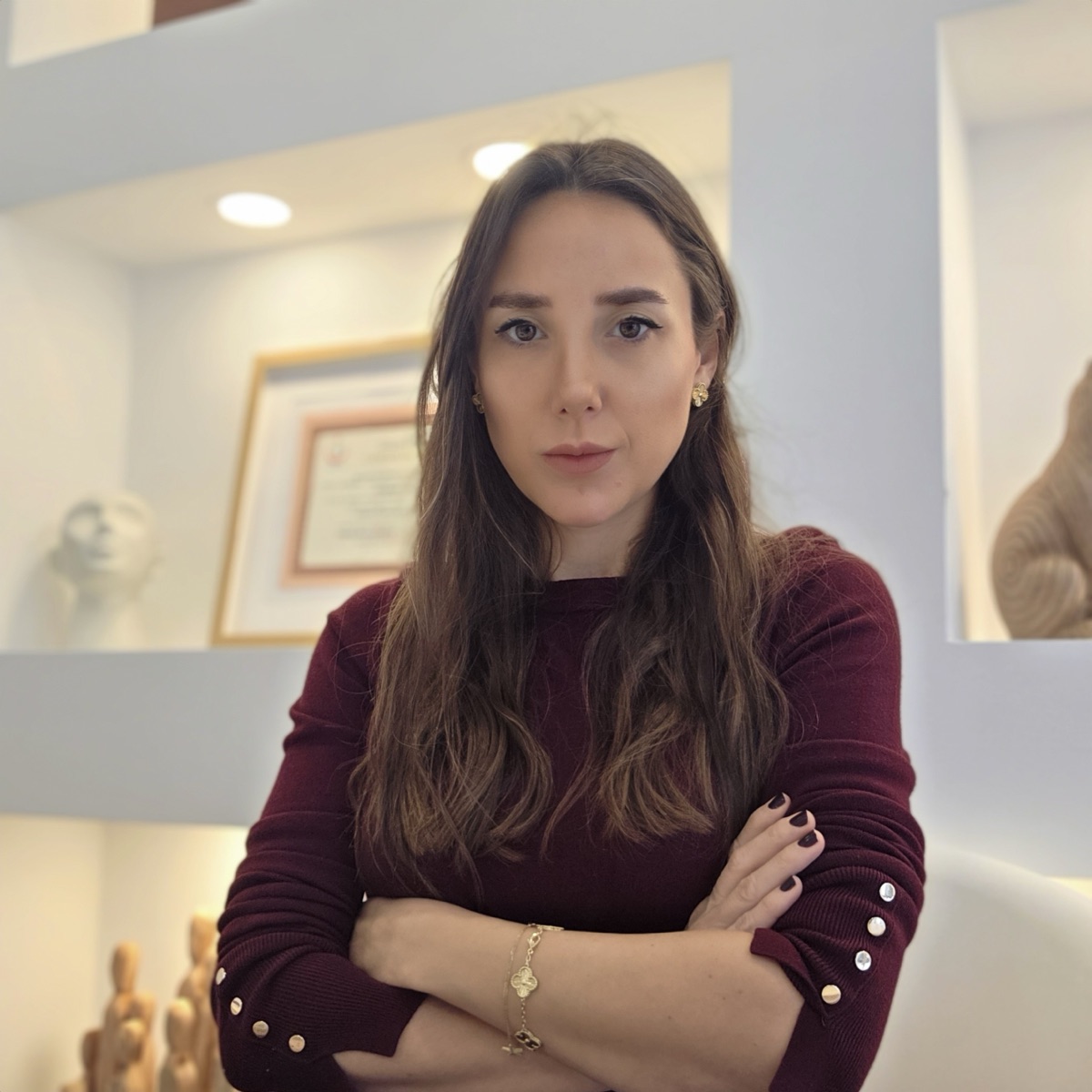
Op. Dr. Yasemin Aydınlı
Plastic, Reconstructive and Aesthetic SurgeonOffers personalized aesthetic solutions with a priority on naturalness and balance.
Frequently Asked Questions
Fat entering the large veins within or beneath the gluteal muscle, which then travels to the lungs. A cadaveric study showed the smallest vessels are in the subcutaneous plane. However, the task force reported embolisms in surgeons who stated they injected subcutaneously only — staying subcutaneous is necessary but not a guarantee.
In a 2025 study, 15% of 726 abdominoplasty patients also had breast surgery in the same operation; after accounting for confounders there was no difference in adverse events. The evidence is limited: one center and one surgeon.
No. In the systematic review, graduated compression stockings prevented travel-related clots in four of six studies; aspirin did not. Low-molecular-weight heparin showed a trend toward efficacy in one study.
Specialist registration (in Turkey, with the Ministry of Health), society memberships checked on those societies' own websites, the name of the surgeon who will operate, whether it takes place in a hospital with intensive care, and the name of the anesthesiologist. Verify these away from the clinic's own website.