The question patients considering breast augmentation ask me most often is "how many cc should it be?". Yet the secret to a natural result is not in a number; it is in how the breast fits your body. In recent years the trend worldwide has shifted markedly: instead of as large as possible, results that suit your body proportions are preferred. In this article I explain what the size is actually based on.
"How many cc" is the wrong starting question
Starting from a number is misleading, because the same volume looks entirely different on two different women. What matters is not the volume but the foundation it sits on: chest width, the diameter of the breast base, skin quality, the amount of existing tissue and the degree of sagging.
That is why, in the consultation, we begin the size conversation with measurements rather than numbers.
Five anatomical factors that determine a natural result
1. Breast base width
This is the most critical measurement. A volume wider than your breast base spills to the sides, creating fullness towards the armpit and a distinctly artificial look. In natural-looking results, the volume stays within the limits of the base.
2. Chest and shoulder width
On a slender woman with narrow shoulders a moderate volume looks pronounced, while on someone with a broad chest the same volume may be barely noticeable. Size only means something relative to the body.
3. Existing tissue amount and skin thickness
The thinner the covering tissue, the more visible the implant edges become. In patients with thin tissue, more moderate volumes and different placement options come into consideration.
4. Skin elasticity
The skin must be elastic enough to carry the volume. On skin with reduced elasticity, excess volume accelerates sagging over time.
5. Degree of sagging
There is an important misconception here: on a sagging breast, volume alone does not lift. In that case either a lift is added or expectations are revisited. Increasing volume merely to hide sagging usually makes the problem bigger.
Why your body proportions matter
What we call a natural look is really a perception of proportion. Your hip width, waist circumference and height create the context that determines whether the breast looks right. That is why I assess not only the chest area but the body as a whole.
The healthiest way to discuss expectations
For deciding on size, the approach I find most useful is to talk in terms of appearance rather than numbers:
- Talking through references that resemble your own body and convey the result you want
- Clarifying what you expect when dressed (for many patients this is the real criterion)
- Answering clearly whether you want it to be noticeable or not
- Feeling the volume with methods such as a sizing bra — far more reliable than trying to imagine an abstract number
There is a point where I must be honest: these methods give an approximate idea, not a guarantee of the exact result. After surgery, the contribution of tissue, swelling and the healing process varies from person to person.
Three common mistakes
- Aiming for someone else's result: A volume that looks lovely on another person looks entirely different on a different anatomy. Comparison is the most common source of unrealistic expectations.
- Saying "I'll get used to it, make it big": Excess volume is the hardest decision to reverse; it stretches the tissue and can pave the way for sagging, thinning and pain over time.
- Thinking of size in isolation: The placement plane, the incision site and the shape of the implant affect how natural the result looks at least as much as the volume. These are planned together.
What changes over time?
Breast augmentation is a lasting decision, but the body is not fixed. Weight change, pregnancy and breastfeeding, and tissue changes with age all affect the result. A volume chosen at today's outer limit may become a burden on the supporting tissue ten years later. In my experience, moderate choices age better in the long run.
Conclusion: the right size is the one that looks like yours
The size of a good breast augmentation result is the one an onlooker does not notice and in which you feel comfortable. And that comes not from a catalogue but from your own anatomy.
Frequently Asked Questions
How many cc gives the most natural result?
There is no number that applies to everyone. Depending on breast base and chest measurements, the same volume can look natural on one woman and pronounced on another.
Will I regret it if I choose small?
Clinical experience shows that regret among those who choose excessive volume is more frequent and harder to remedy than among those who choose moderately. Even so, this is a personal decision and is clarified together at the consultation.
Can I see the exact size before surgery?
Sizing methods and planning tools give a strong idea but not exact certainty. Tissue structure and healing vary from person to person.
If there is sagging, is augmentation enough?
Usually not. With marked sagging, volume alone does not provide a lift; adding a lift may be necessary. This is assessed at the consultation.
Does the size change over time?
The volume does not change, but the tissue around it does. Weight change, pregnancy and age can affect how the result looks.
Is augmentation with fat injection also possible?
Some surgeons perform augmentation with fat alone; I do not prefer this approach. I perform the augmentation with a silicone implant and, when needed, use fat injection in the same operation as an addition to correct asymmetry and support the implant. Suitability is determined at the examination.
About the Author
Op. Dr. Yasemin Aydınlı is a graduate of Hacettepe University English-medium Faculty of Medicine. She completed her specialization training in Plastic, Reconstructive and Aesthetic Surgery at Ankara University Faculty of Medicine. She practices aesthetic and reconstructive surgery in Istanbul, with breast reduction, breast augmentation, breast lift, abdominoplasty, and body contouring surgeries among her primary areas of interest.
This article has been prepared for informational purposes and does not substitute for medical advice. Each patient's anatomical features, health status, and expectations are different. Treatment options and eligibility assessment can only be determined after a personal examination.
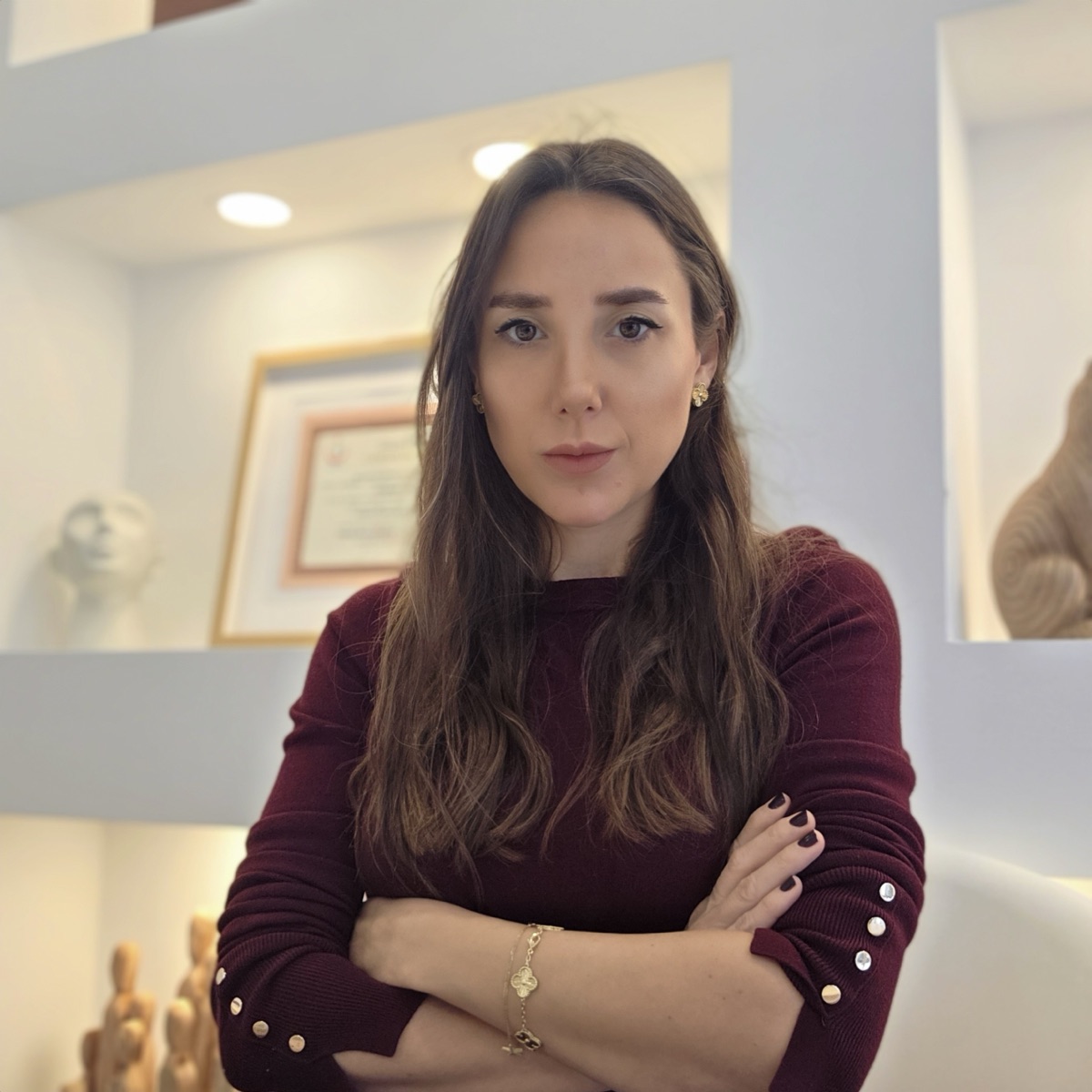
Op. Dr. Yasemin Aydınlı
Plastic, Reconstructive and Aesthetic SurgeonOffers personalized aesthetic solutions with a priority on naturalness and balance.