Short answer
Markedly sagging skin does not fully tighten on its own. There is some retraction of the skin; this process usually takes 12–18 months and is more pronounced in younger people and with moderate weight loss. If surgery is being considered, the weight is expected to remain stable for about 3 months. "Stable weight" does not mean reaching your ideal weight, but the weight you can maintain.
Over the past two years, the most common picture I see in my practice has changed: now a significant proportion of patients come having already lost weight, and their problem is not excess fat but leftover skin. The spread of weight-loss medications has amplified this picture worldwide. In this article, I have tried to give the scientific answers to these questions as clearly as possible.
Why doesn't the skin tighten back up?
Skin is not an infinitely elastic covering. Two proteins determine its capacity to stretch: collagen (strength) and elastin (recoil). In skin that stays stretched for a long time, the elastin fibers are permanently damaged. When weight is lost, the underlying volume disappears, but the damaged elastin network cannot return to its former state; the excess skin stays where it is.
Factors that determine the chance of retraction:
- Age: Elastin production decreases with age; retraction is better in younger skin.
- Amount and speed of weight loss: The greater and the faster it is, the more inadequate the retraction.
- How long the excess weight was carried: In skin that has stayed stretched for years, elastin damage is more permanent.
- Genetics and skin quality: They create a marked difference from person to person.
- Smoking: It impairs collagen synthesis and microcirculation.
- Sun damage: It increases collagen breakdown.
How long should I wait — will it correct itself?
There is some improvement. Observations show that in younger patients and with moderate weight loss, skin retraction continues over 12–18 months. However, with large weight losses and in older age, this retraction is often inadequate.
My practical approach: do not rush. Surgery performed before your weight has settled can create new sagging as further weight loss continues afterward.
When can surgery be performed?
What determines surgical timing is that the weight is stable:
- Expected duration: The weight remaining constant for about 3 months.
- What "stable" means: No fluctuation of more than a few kilos in weight during this period. If fluctuation continues, the body has not yet reached balance.
- If the weight is still dropping: It is necessary to wait; continued loss can create new sagging after surgery.
An important nuance: stable weight does not mean ideal weight. It is the weight you can realistically maintain.
Muscle is also lost during weight loss
Not all of the weight lost during weight loss is fat. Whatever the method — through diet, exercise, surgery, or medication support — part of the weight loss comes from lean tissue, that is, muscle. This is not a flaw specific to any method, but a condition inherent to weight loss itself.
Here there is a balance that requires honesty, because the subject is often presented one-sidedly:
- Fat loss is greater than muscle loss; therefore body composition, that is, the ratio of lean tissue to total weight, usually improves.
- In one study, over 12 months fat mass decreased by 18%, while lean tissue initially dropped somewhat and then stabilized.
- In the same study, grip strength increased and the rate of sarcopenic obesity fell from 49% to 33%.
So the right question should not be "is muscle being lost?" but "how do we protect muscle?" The two methods with the strongest evidence are: adequate protein intake and resistance exercise.
What this means surgically: Muscle mass and nutritional status directly affect wound healing. That is why, in the preoperative assessment, I look not only at weight but also at protein intake, muscle mass, and blood values.
Preoperative preparation: what does it achieve scientifically?
- Protein intake: Wound healing depends on collagen synthesis, which in turn depends on an adequate pool of protein and amino acids.
- Resistance exercise: One of the two interventions with the strongest evidence for preserving muscle; the other is adequate protein intake.
- Quitting smoking: It is the single most powerful variable affecting wound healing and tissue circulation.
- Blood values: Screening for deficiencies such as anemia, low protein, vitamin D, and B12 — this is especially important in patients who have undergone bariatric surgery.
- Weight diary: A weight chart from the last few months is the most objective answer to the question "is it stable?"
Which approach for which area?
Sagging after weight loss usually is not limited to a single area. The commonly encountered picture is as follows:
- Abdomen (apron-shaped sagging): A tummy tuck comes into consideration.
- Arms (inner surface): An arm lift comes into consideration.
- Inner thigh: A thigh lift comes into consideration.
- Breast (volume loss and sagging together): A lift is considered, with the addition of volume if necessary.
- Only excess fat, good skin quality: Liposuction alone may be sufficient.
The critical distinction is this: if skin quality is good and the problem is only excess fat, liposuction may be sufficient. However, if there is significant excess skin, liposuction alone can worsen the sagging; in that case the skin needs to be removed.
Can I have them all done at the same time?
Some combinations are suitable, others are not. The determining factors are: total operating time, risk of blood loss, the patient's general health, and healing capacity. In long, multi-area operations, the risk of complications increases. For this reason, staged planning is often safer.
Will there be a scar?
Yes, and this must be said clearly. Because post-weight-loss body contouring is based on removing skin, it leaves permanent scars. The goal here is not the absence of scars, but positioning the scar — with careful technique — so that it stays hidden under clothing. Most of my patients accept this trade-off consciously; but it is essential that the expectation be set correctly from the outset.
Frequently Asked Questions
How long after losing weight can I have surgery?
It can be assessed after your weight has remained constant for about 3 months. If the weight is still dropping, it is necessary to wait.
Does sagging skin tighten up with exercise?
Exercise increases muscle mass and can improve appearance; however, it does not eliminate excess skin. Elastin damage is not reversed by exercise.
Do creams, massage, or devices work?
In mild skin laxity, some device-based methods can provide limited benefit. They are not effective for significant excess skin; in that case the solution is surgical.
I am using a weight-loss medication — do I need to stop it?
This is a decision to be made together with the physician who prescribed the medication. From a surgical standpoint, what matters is not the medication itself, but whether your weight is stable.
What happens if I gain weight again after surgery?
Significant weight gain spoils the result. That is why surgery is planned for a period when the weight can be maintained.
When does the result become clear?
The resolution of swelling and the settling of the tissue usually take 6–12 months. The early appearance is not the final result.
If I have lost muscle, is surgery risky?
It is not necessarily risky; however, since nutritional status and muscle mass affect healing, they are assessed before surgery and corrected if necessary.
Are these operations cosmetic or health-related?
They can be both. Sagging skin can lead to fungal infections within the folds, recurrent skin irritation, restricted movement, and hygiene problems. In this case, function is also at stake.
About the Author
Op. Dr. Yasemin Aydınlı is a graduate of Hacettepe University English-medium Faculty of Medicine. She completed her specialization training in Plastic, Reconstructive and Aesthetic Surgery at Ankara University Faculty of Medicine. She practices aesthetic and reconstructive surgery in Istanbul, with breast reduction, breast augmentation, breast lift, abdominoplasty, and body contouring surgeries among her primary areas of interest.
This content is for general information purposes and does not replace medical advice. Decisions regarding the use and discontinuation of medication should be made with your relevant physician. Every patient's anatomy, health status, and healing process is different; suitability can only be determined by examination.
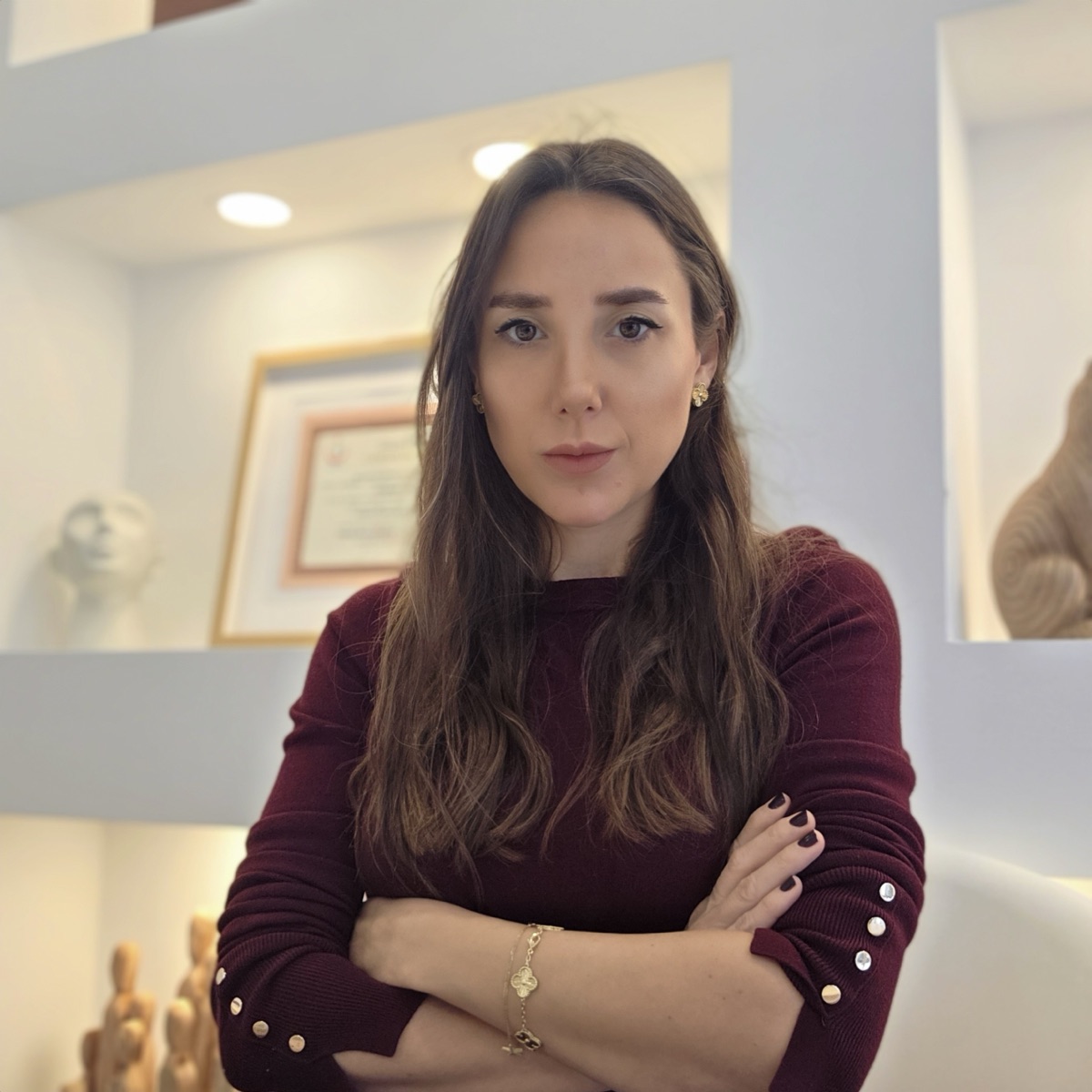
Op. Dr. Yasemin Aydınlı
Plastic, Reconstructive and Aesthetic SurgeonOffers personalized aesthetic solutions with a priority on naturalness and balance.